You are going to Badaling — the closest stretch of the Great Wall to Beijing, about 70 km out of town. This page is the whole trip in order: getting there, buying the ticket, finding the restroom, riding the cable car, taking a photo, and getting back. 17 sentences, each one with the Chinese, the pinyin, an English sound-alike you can read out loud right now, a button that plays it, and a line explaining why Chinese says it that way.
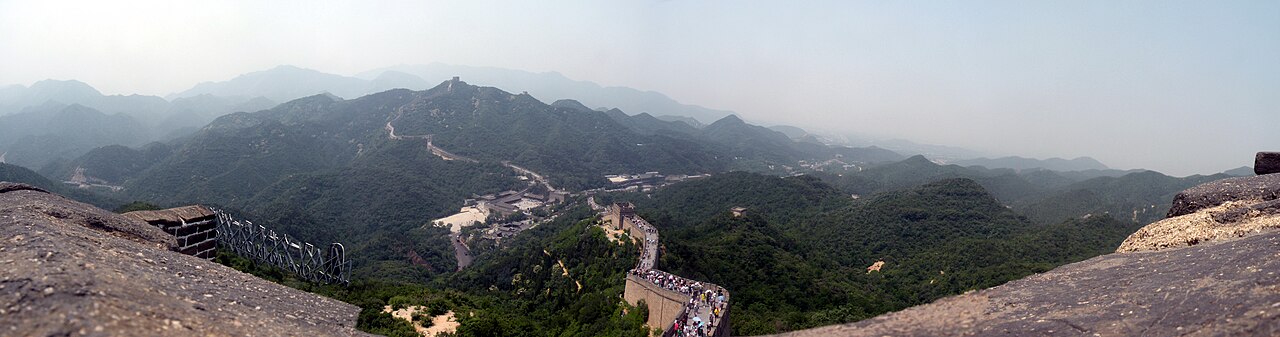
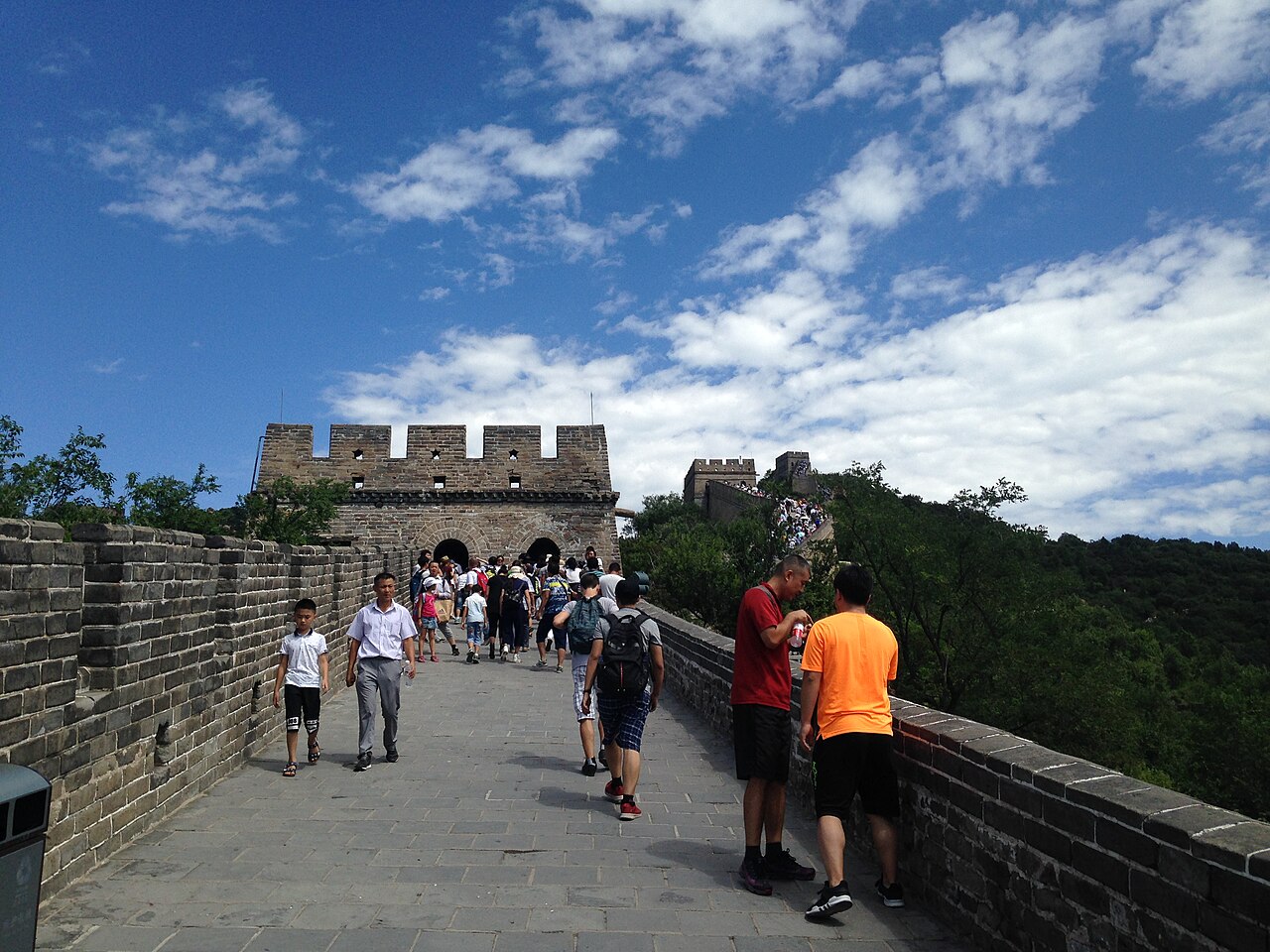
Badaling. The wall follows the ridgeline. Everything below happens on the way to and around this view. Photo: Ktausz, CC BY-SA 3.0.The watchtowers. Each tower is one stage of the climb; you will ask how far the next one is. Photo: そらみみ, CC BY-SA 4.0.
How to use this page
Read the four lines in each card
The big Chinese line — this is what you say.
The pinyin — the official romanisation, with tone marks.
“Say it like” — an English sound-alike. Pinyin is hard to guess from spelling, so if you want to say it out loud today, start here. Capitals mark the stressed syllable.
🔊 Hear it — plays the line using the voice your browser already has. Nothing is downloaded, and nothing leaves your phone.
Why: — the one grammar point that makes the sentence work (word order, measure words, the little particles).
Checking this device for a Chinese voice…
Part 1 · Getting there
Taxi, city bus, or tour coach
怎么去
Three ways out of Beijing, and one sentence each. Say the destination and nothing else — that is a complete, polite request in Chinese.
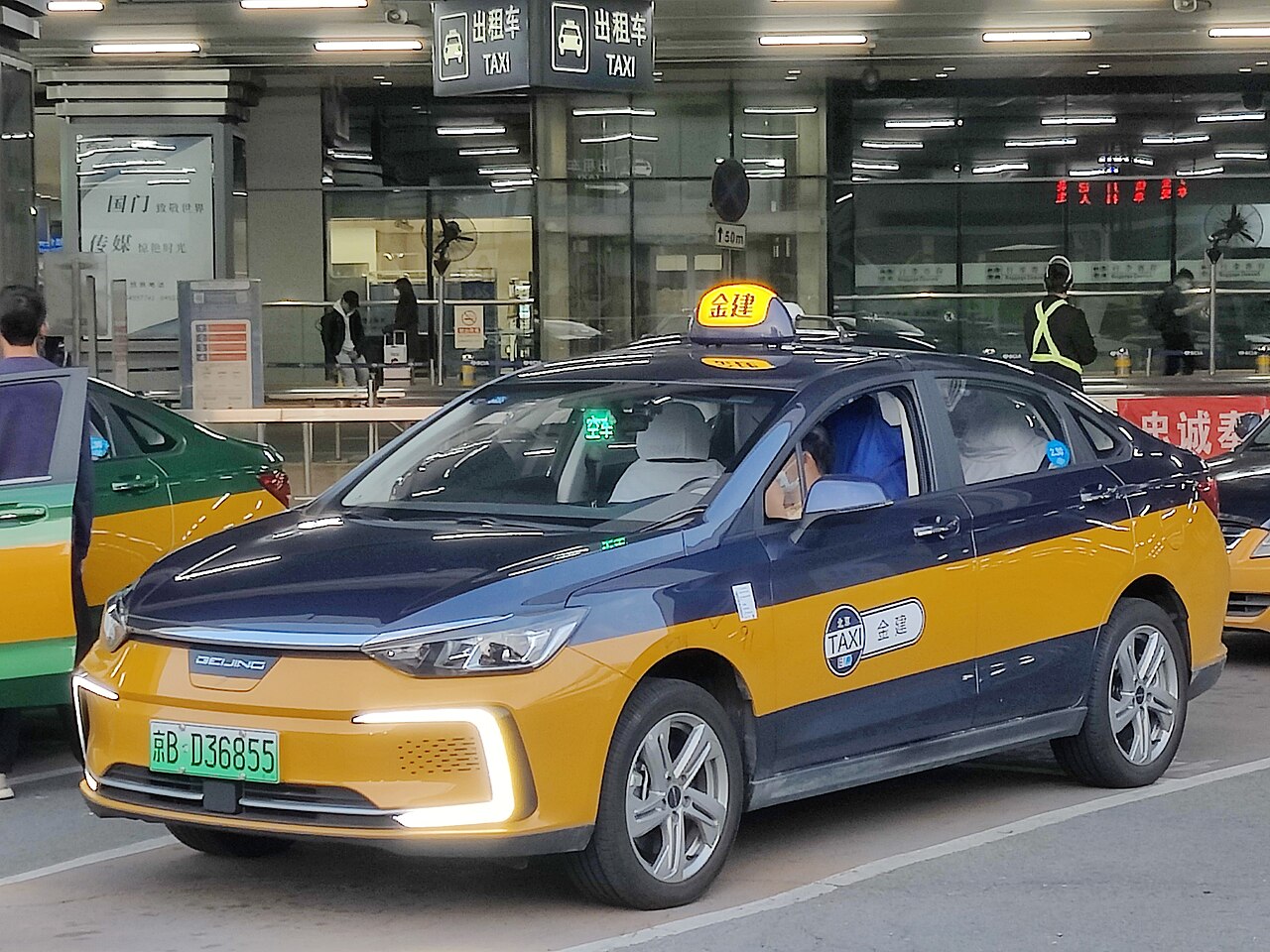
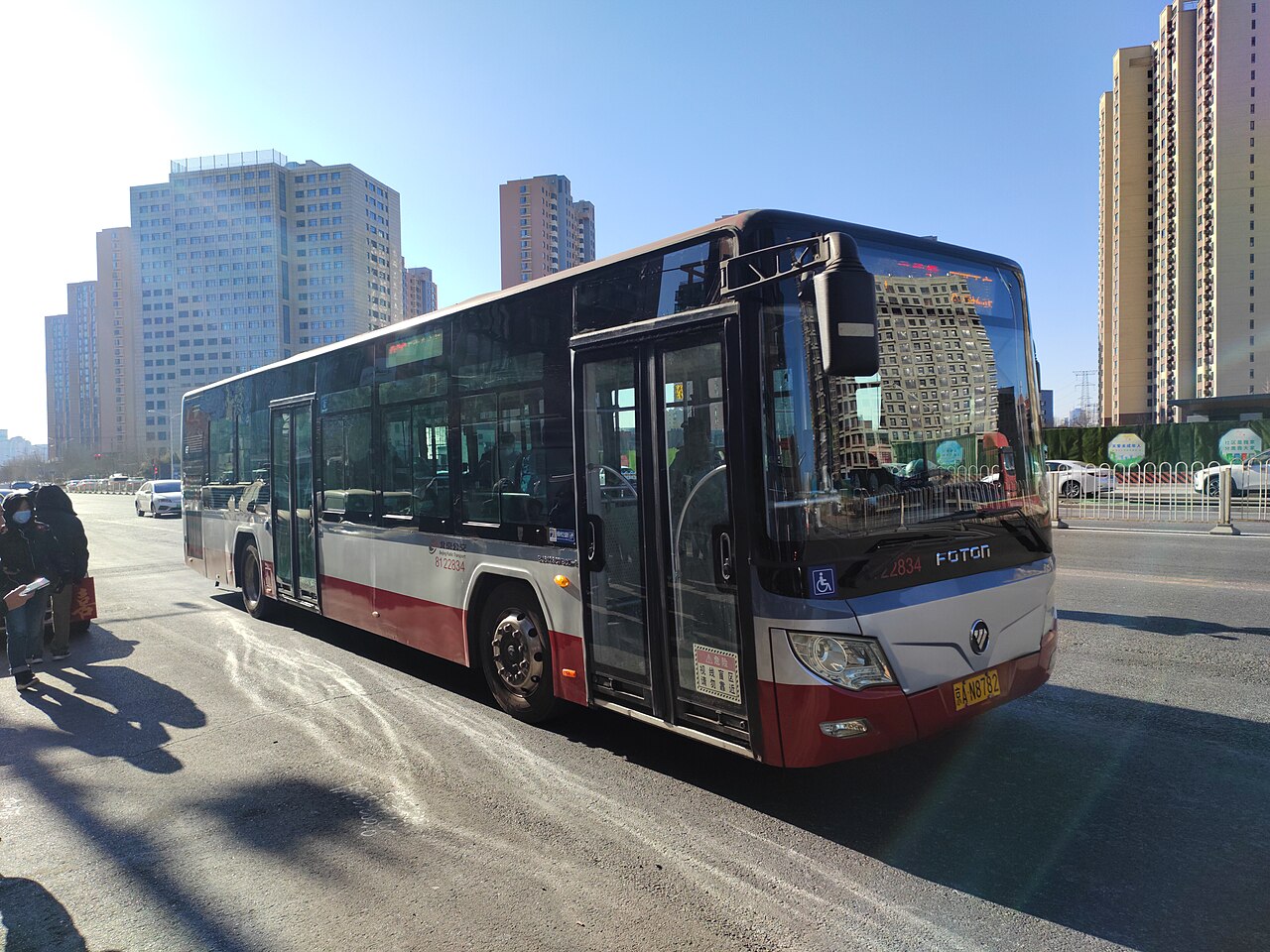
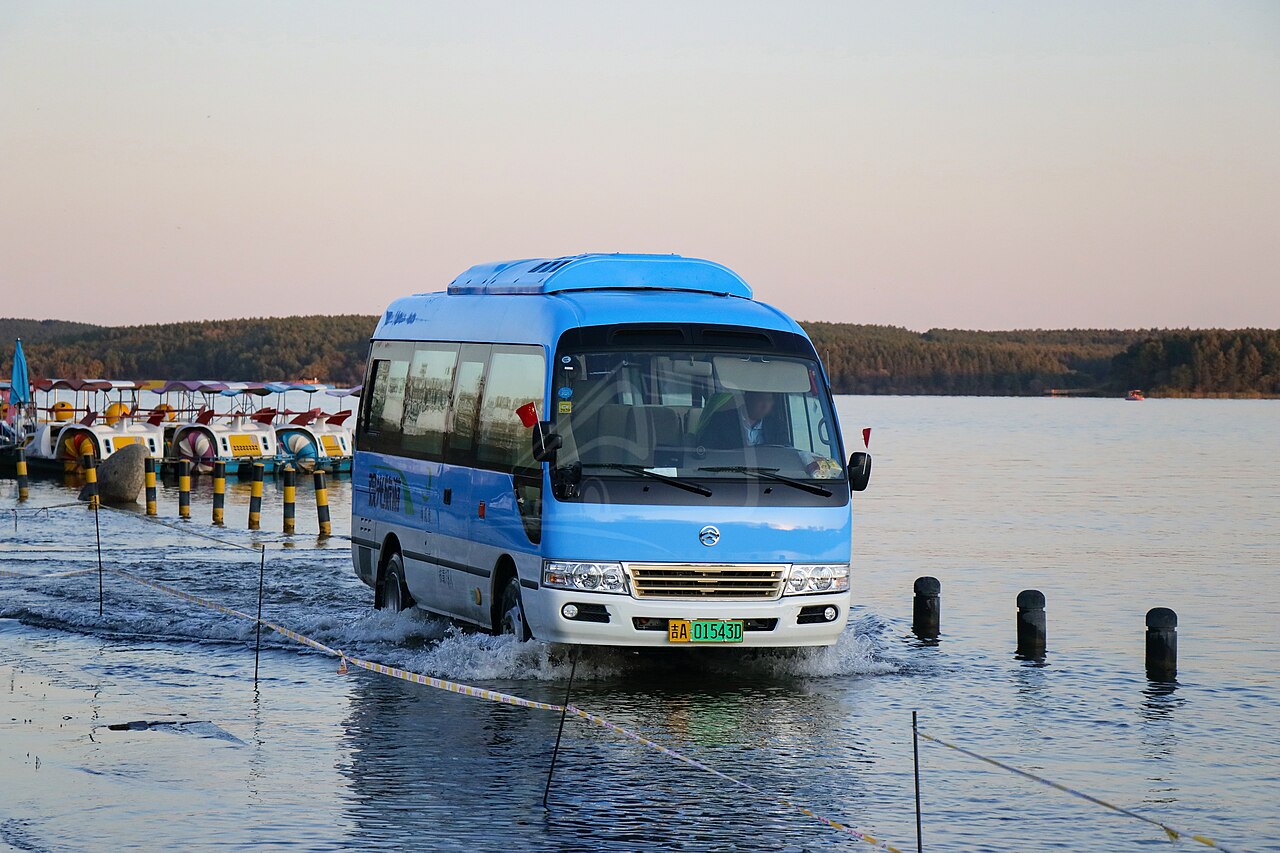
Taxi. Say the line below as you get in. Photo: Anonymousfox36, CC BY-SA 4.0.City bus. Cheapest, slowest, and there is usually a conductor. Photo: CNHowey, CC0.Tour coach. Booked through a hotel or agency; leaves on a schedule. Photo: Transteel0412, CC BY-SA 4.0 — a coach in China, not at Badaling.
01 · taxi
师傅,去八达岭长城。
Shīfu, qù Bādálǐng Chángchéng.
Say it like“SHIR-foo, chyoo BAH-dah-ling CHAHNG-chung”
MeansDriver, to the Badaling Great Wall.
Why: 师傅 (shīfu, “master”) is how you address any driver, cook or repairman — it replaces “excuse me” and “please” all at once. Then you just name the place. There is no Chinese word for “to” that you need here, and no “please” to add: the destination is the request.
02 · city bus
这趟车到八达岭吗?
Zhè tàng chē dào Bādálǐng ma?
Say it like“juh TAHNG chuh dow BAH-dah-ling ma”
MeansDoes this bus go to Badaling?
Why:趟 (tàng) is the measure word for one run of a bus or train — “this run”, not “this vehicle”. And 吗 (ma) at the end is the whole question mark: stick it on a statement and it becomes a yes/no question. Nothing else in the sentence changes.
03 · tour coach
这是去长城的车吗?
Zhè shì qù Chángchéng de chē ma?
Say it like“juh shir chyoo CHAHNG-chung duh chuh ma”
MeansIs this the bus to the Great Wall?
Why:的 (de) glues a description onto a noun: literally “the goes-to-the-Great-Wall bus”. English puts the description after the noun — Chinese puts it before. Once you see that, half of Chinese word order stops being strange.
04 · any of the three
到长城要多久?
Dào Chángchéng yào duō jiǔ?
Say it like“dow CHAHNG-chung yaow dwor JYOH”
MeansHow long does it take to get to the Great Wall?
Why:要多久 (yào duō jiǔ) is a fixed frame meaning “needs how long” — 久 is “long (in time)”, not “long (in size)”. Swap the first two words for any other destination and the same frame keeps working.
Part 2 · At the gate
Buying the ticket
买票
Chinese counts things with a measure word between the number and the noun. Tickets, bottles and photos all take 张 / 瓶 — and there is no plural to worry about.
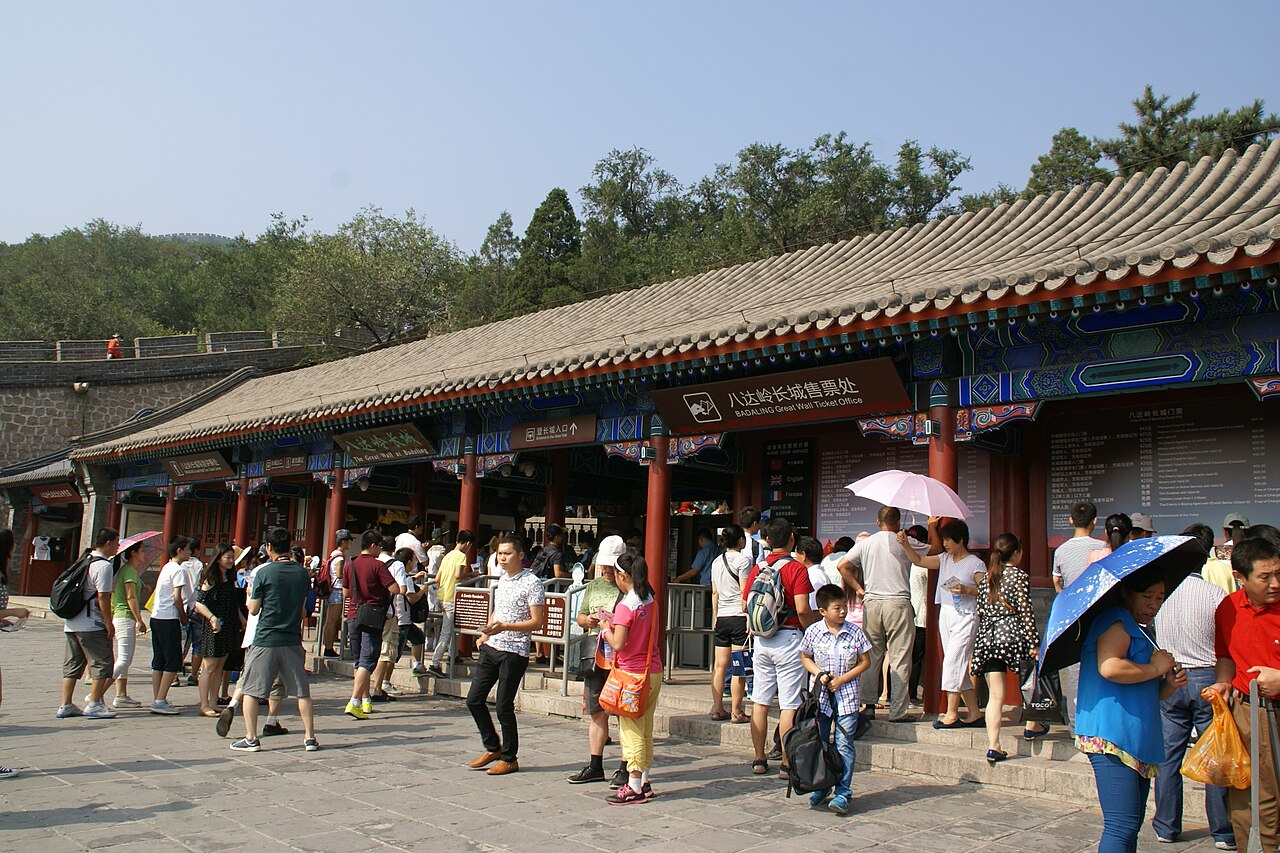
The ticket window at Badaling. Buy here before you walk up. Photo: Hermann Luyken, CC0.The entrance. Tickets are checked here, then the climb starts. Photo: そらみみ, CC BY-SA 4.0.
05 · buying
两张成人票。
Liǎng zhāng chéngrén piào.
Say it like“lyahng jahng CHUNG-ren pyaow”
MeansTwo adult tickets.
Why:张 (zhāng) counts flat things — tickets, paper, tables, photos. The shape is number + measure word + noun, and the noun never takes an -s: two ticket is already two tickets. Also note “two” is 两 (liǎng), not 二 (èr), whenever you are counting things.
06 · asking about a discount
有学生票吗?
Yǒu xuésheng piào ma?
Say it like“yoh SHWEH-shung pyaow ma”
MeansDo you have student tickets?
Why:有 (yǒu) means “to have” and “there is”. To ask whether something exists you state “have …” and add 吗 — you never need a “do you”. Swap 学生 for 儿童 (értóng, children) or 老人 (lǎorén, seniors) and the question still works.
07 · the price
一共多少钱?
Yígòng duōshao qián?
Say it like“ee-GONG DWOR-shaow chyen”
MeansHow much is it altogether?
Why:一共 (yígòng) = “all together”; 多少 (duōshao) = “how much / how many”; 钱 (qián) = money. Chinese has no plural, so 多少钱 covers one price and a bundle of prices alike. The 多少 here takes a light, neutral tone — dwor-shaow, not dwor-shào.
Part 3 · Just inside
Restroom, a photo, a bottle of water
进门后
Three sentences that cover most of what you will need for the rest of the day. The first one works anywhere in China.
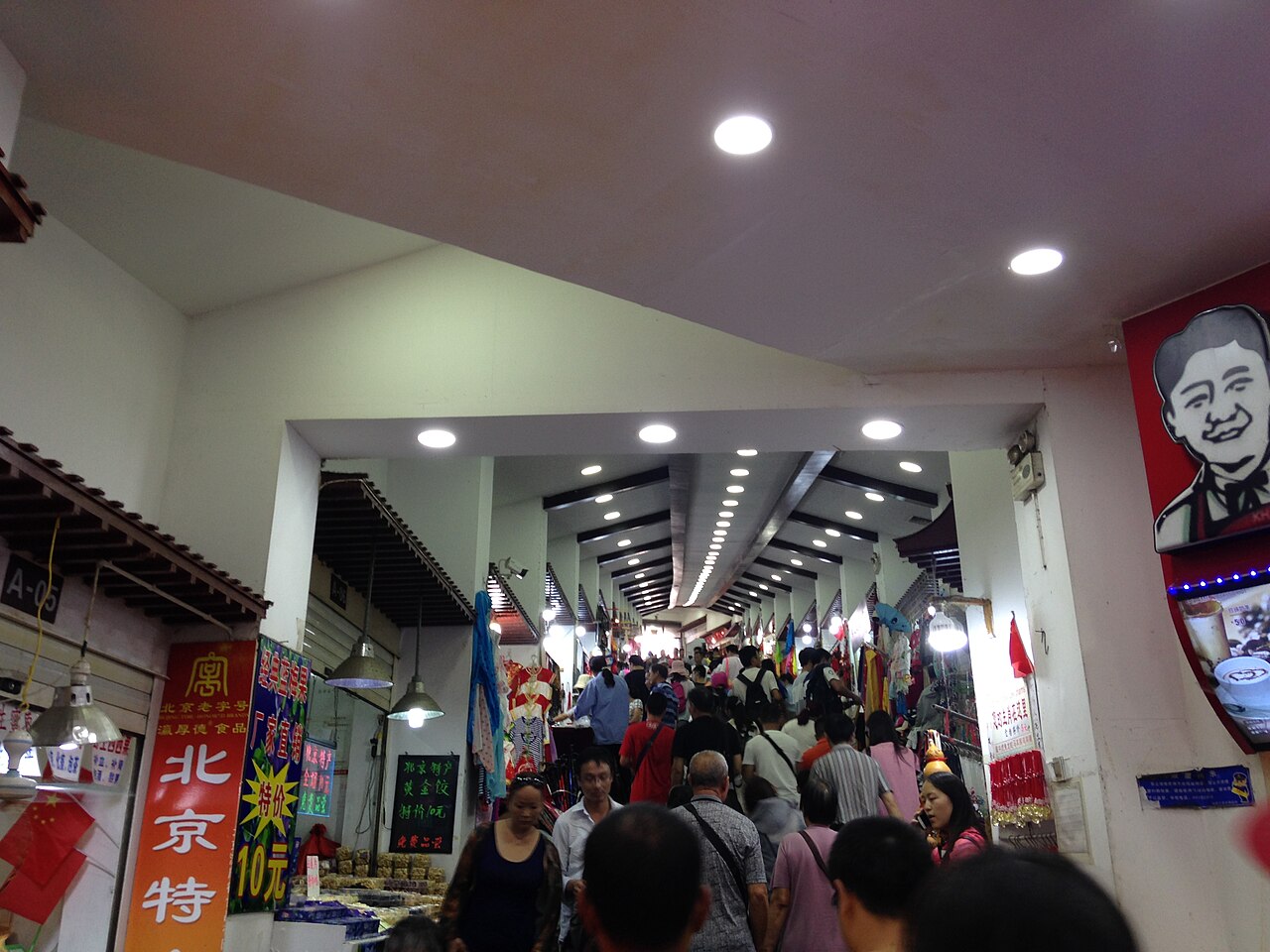
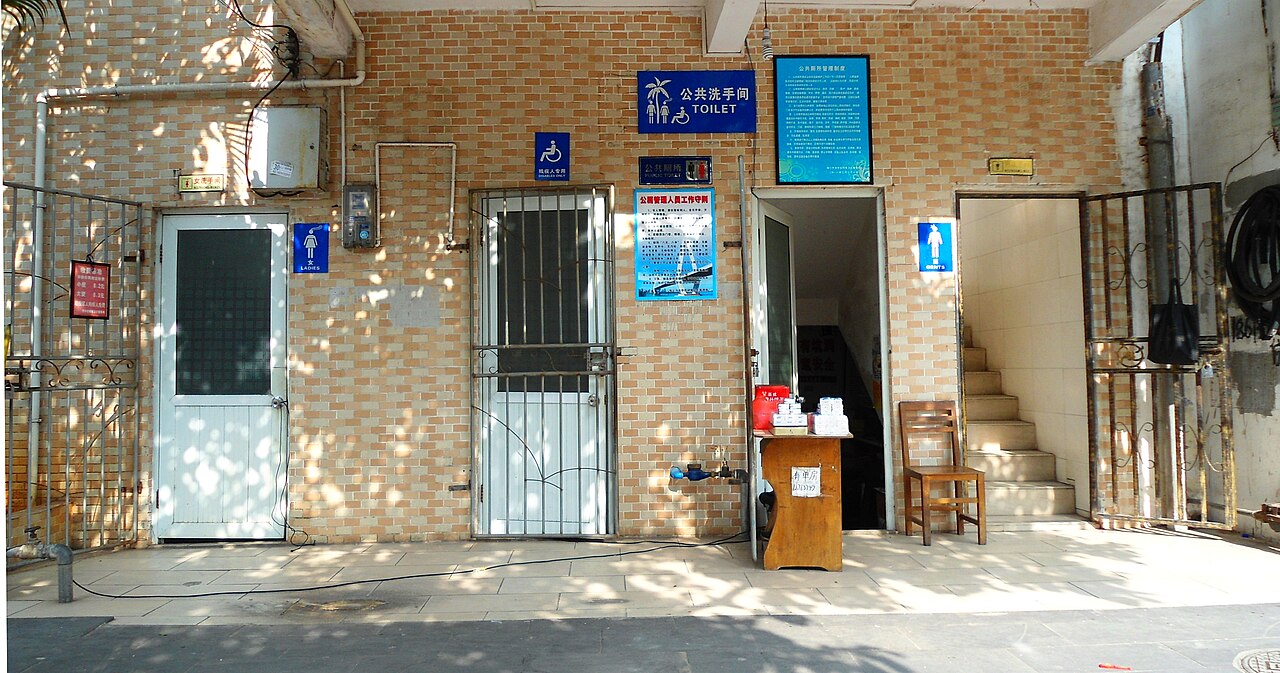
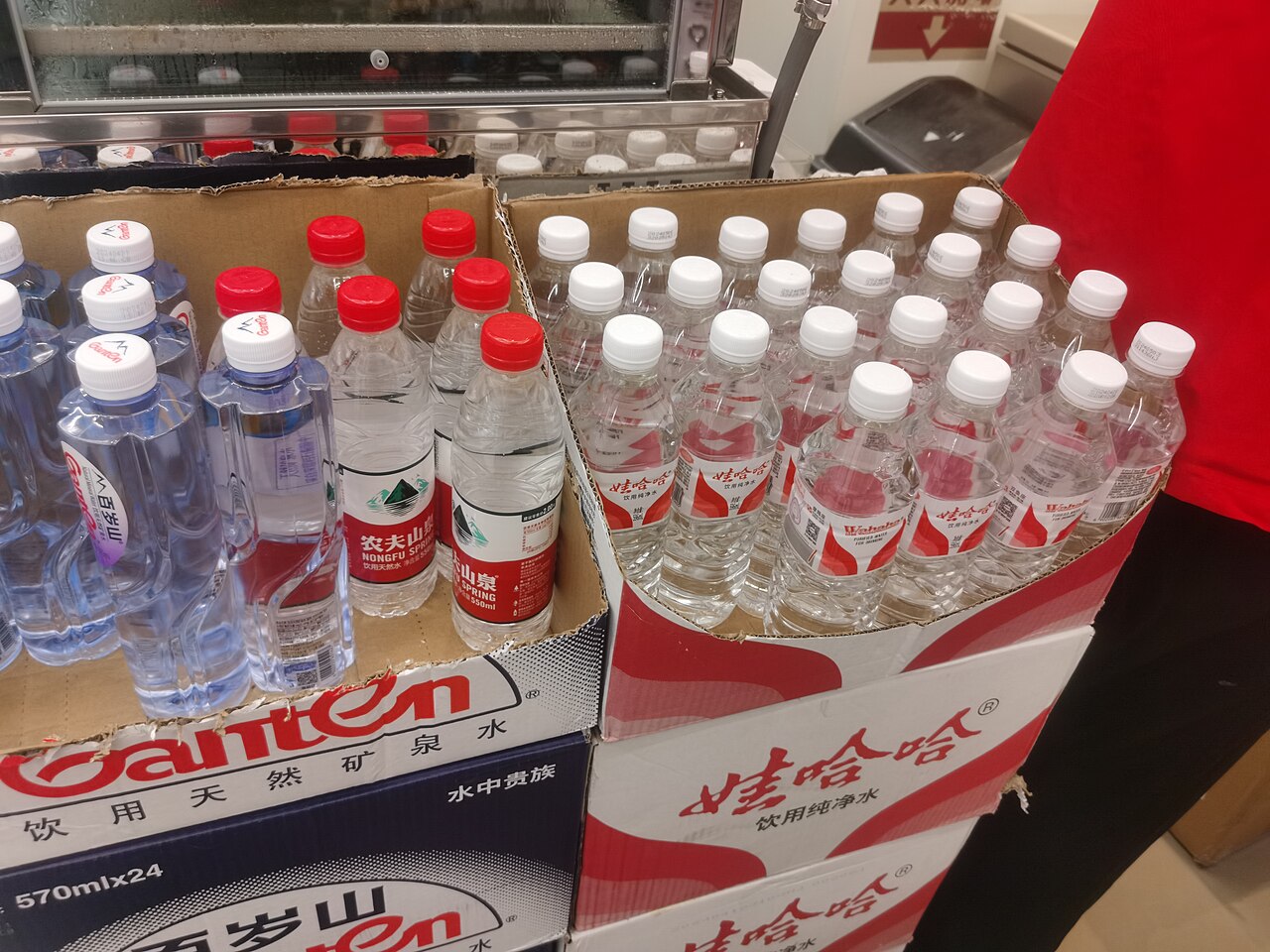
The restroom. Look for 洗手间 / 卫生间 on the sign — the same words you are about to say. Photo: Anna Frodesiak, CC0 — Haikou, Hainan (not Badaling).Water. Sold at the gate, and again at the top for more. Photo: Shwangtianyuan, CC BY-SA 4.0 — Suzhou.
08 · asking
请问,洗手间在哪儿?
Qǐngwèn, xǐshǒujiān zài nǎr?
Say it like“ching-WUN, SHEE-show-jyen dzai NAR”
MeansExcuse me, where is the restroom?
Why:请问 (qǐngwèn) is the polite opener for stopping a stranger — “may I ask”. Then watch the order: 在哪儿 (zài nǎr, “at where”) goes at the end. English asks “Where is…” and puts the location first; Chinese names the thing first and asks last. 洗手间 is literally “wash-hands room”.
09 · asking a favour
能帮我拍张照吗?
Néng bāng wǒ pāi zhāng zhào ma?
Say it like“nung bahng wor pie jahng jow ma”
MeansCould you take a photo for me?
Why:能帮我 = “can (you) help me” — the word “you” is simply dropped, because it is obvious. Chinese leaves out any subject the context already supplies; you will hear this constantly. Hand over your phone as you say it.
10 · at a stall
一瓶水,谢谢。
Yì píng shuǐ, xièxie.
Say it like“ee ping shway, SHYEH-shyeh”
MeansOne bottle of water, thanks.
Why:瓶 (píng) is the measure word for bottles, so “one bottle water” is a complete and normal order — the “of” is already inside the measure word. Note 一 here is pronounced yì (falling tone) because the next word 瓶 rises; the tone of 一 changes with what follows it.
Part 4 · On the wall
Cable car, the climb, catching your breath
长城上
The steps at Badaling are steep and uneven. These four lines handle the ride up, the honest question about how much further, and the stop you are going to want to take.
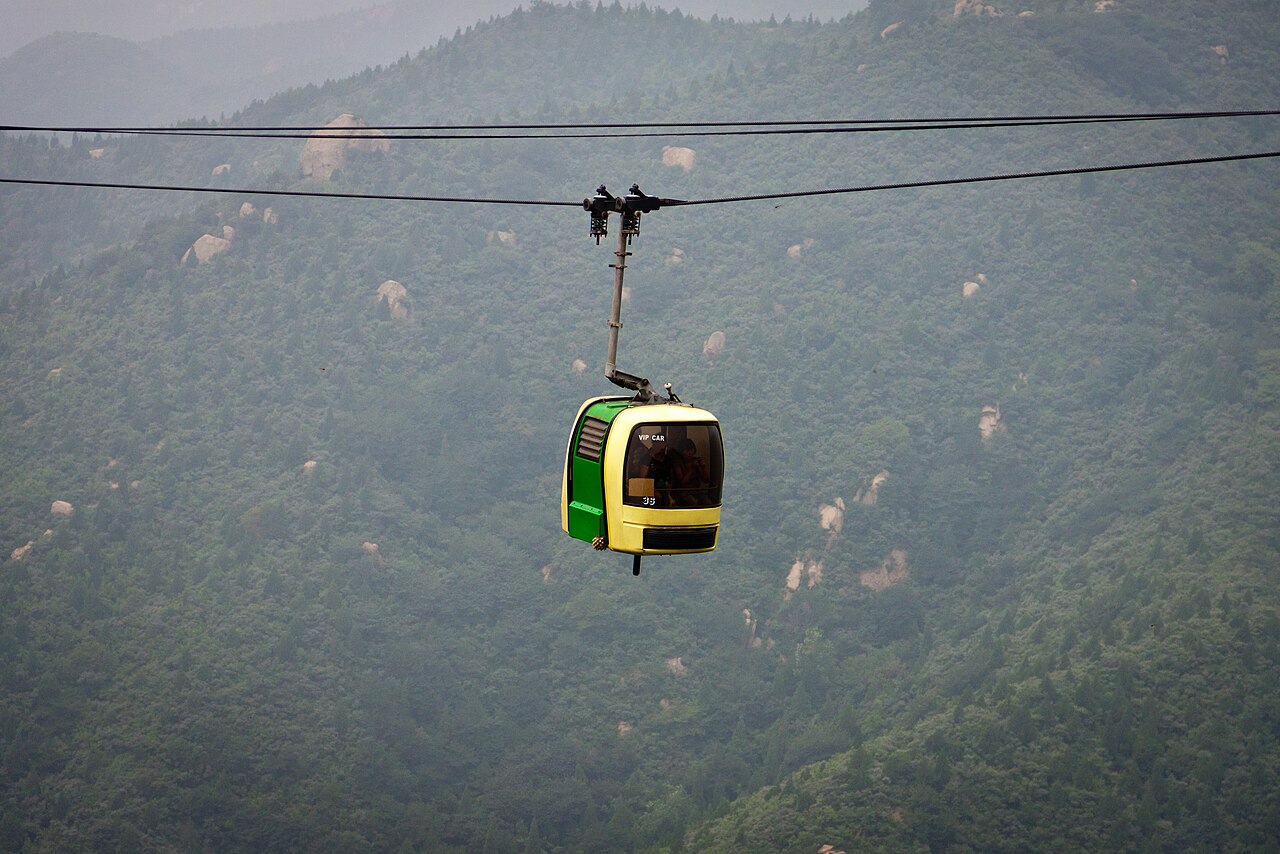
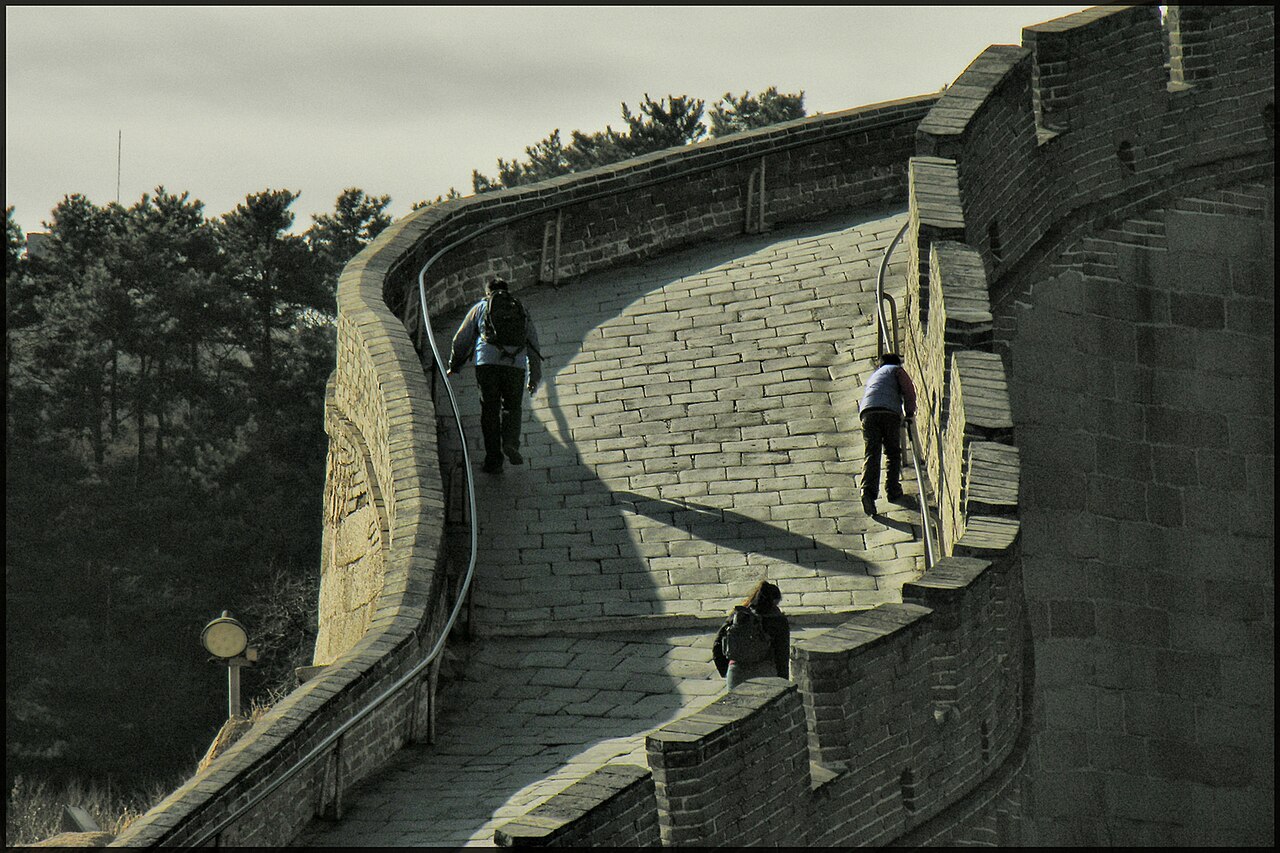
The cable car at Badaling. Saves an hour of stairs, costs extra, queues in summer. Photo: Nikolaj Potanin, CC BY-SA 2.0.The climb. These are the steps the “rest a bit” line is for. Photo: Petr Kraumann, CC BY 3.0.
11 · finding the ride
缆车在哪儿坐?
Lǎnchē zài nǎr zuò?
Say it like“LAHN-chuh dzai NAR DZWOR”
MeansWhere do I get the cable car?
Why: Same 在哪儿 frame as the restroom sentence — the thing first, then “at where”, then the verb 坐 (to sit / to ride). Where English says “Where do I ride the cable car”, Chinese says “cable car at where ride”. Lǎn-chē is literally “cable car”.
12 · the honest question
还要多久到顶?
Hái yào duō jiǔ dào dǐng?
Say it like“high yaow dwor JYOH dow DING”
MeansHow much longer to the top?
Why:还 (hái) adds “still / more” to the how-long frame you already met in sentence 04. 到顶 (dào dǐng) = reach the top — 顶 is the summit, and it is also what you call the top of anything. Ask this at every tower; the answer changes.
13 · taking a break
我歇一会儿。
Wǒ xiē yíhuìr.
Say it like“wor SHYEH ee-HWARR”
MeansI’ll rest for a bit.
Why:一会儿 (yíhuìr) means “a short while”, and the little -r on the end is the Beijing accent curling the syllable — the same sound you hear in the city, and the reason “huì” sounds like “hwarr” here. 歇 (xiē) is the verb: to rest. No “for” is needed.
14 · checking
这里能上去吗?
Zhèlǐ néng shàngqù ma?
Say it like“juh-LEE nung SHAHNG-chyoo ma”
MeansCan you go up here?
Why: Chinese stacks direction onto the verb instead of using a preposition: 上 (up) + 去 (go) = 上去, “go up”. Add the question particle 吗 and you have “here can go-up?” — useful when a stretch is closed for repairs, which happens.
Part 5 · Getting back
The last bus, and the ride home
回来
Badaling empties out in the late afternoon. The last departure is the one thing worth asking about on your way in, not on your way out.
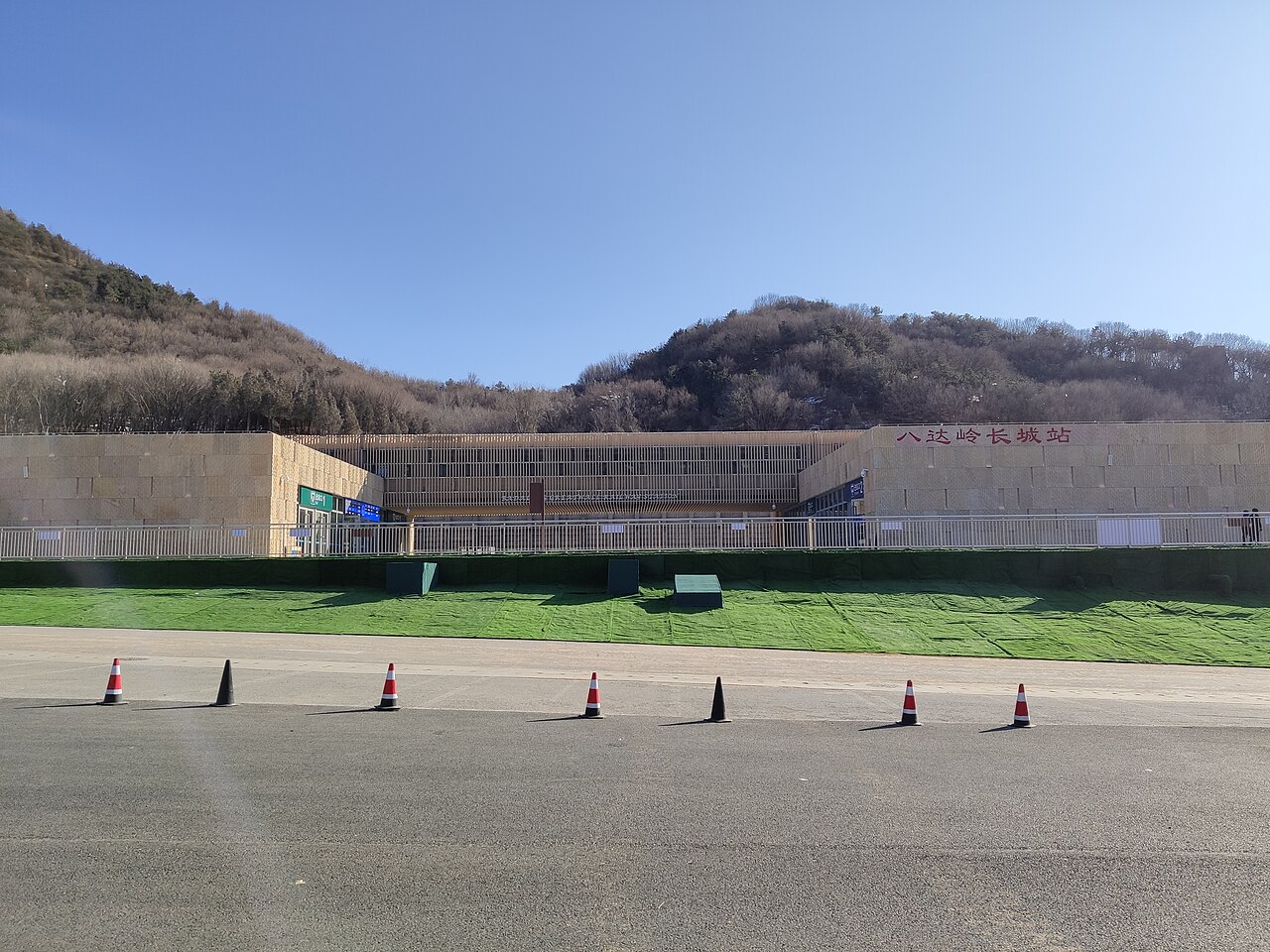
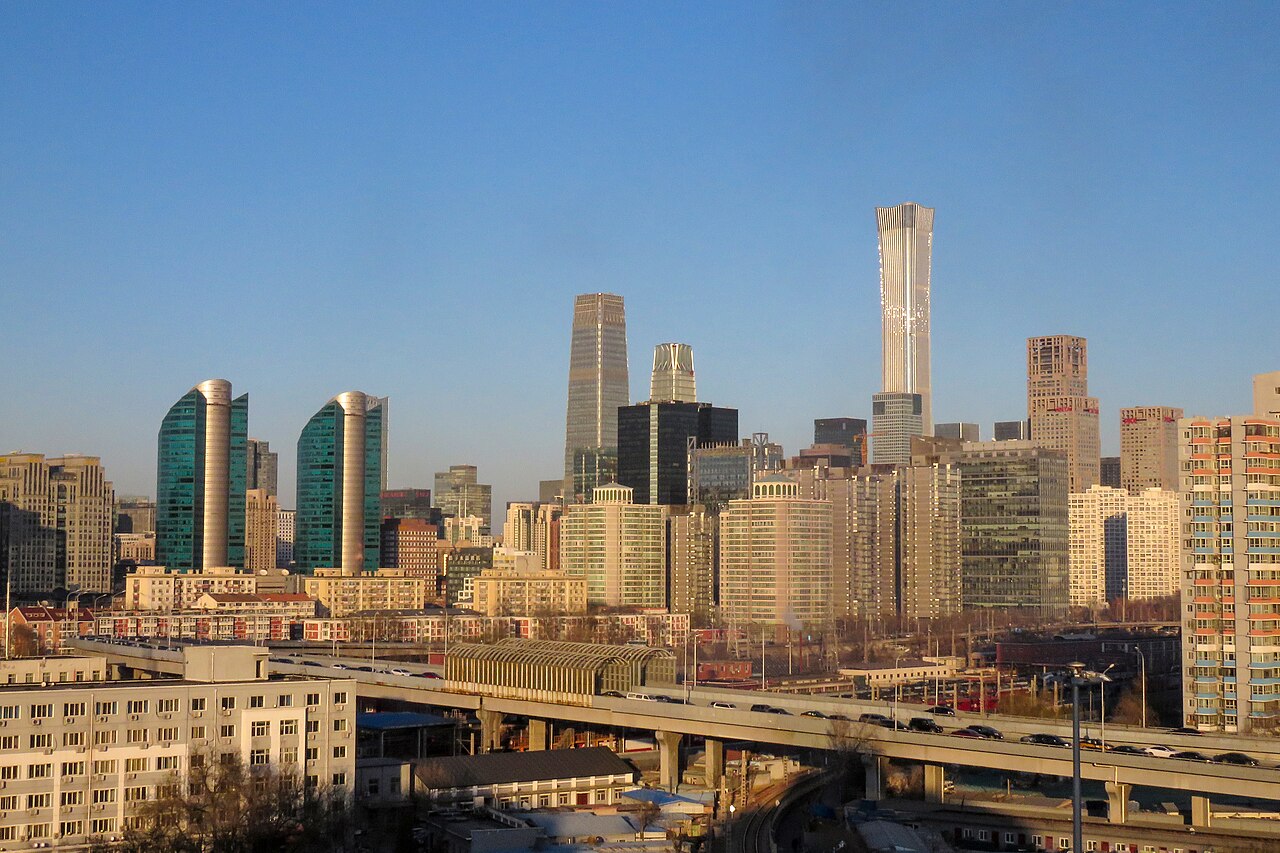
Badalingchangcheng station. The high-speed rail stop is right by the wall; from here it is about half an hour into the city. Photo: Pcnl, CC BY-SA 4.0.Back in Beijing. 市区 (shìqū) is the part of town you are heading back to. Photo: N509FZ, CC BY-SA 4.0.
15 · last departure
末班车几点?
Mòbān chē jǐ diǎn?
Say it like“mwor-BAHN chuh jee DYEN”
MeansWhat time is the last bus?
Why:末班 = the last scheduled run of the day; 几点 (jǐ diǎn) asks the time — literally “how many o’clock”, because Chinese tells time in points (点). The subject “the last bus” is already stated, so nothing else is needed.
16 · getting a car
能帮我叫辆车吗?
Néng bāng wǒ jiào liàng chē ma?
Say it like“nung bahng wor JYAOW lyahng chuh ma”
MeansCould you call a car for me?
Why: The same 能帮我 … 吗 frame as asking for a photo, with a different verb dropped in. 叫 (jiào) here means “to call for / summon”; 辆 (liàng) is the measure word for vehicles — cars, buses, bikes. One frame, endless favours.
17 · the fare
回市区多少钱?
Huí shìqū duōshao qián?
Say it like“HWAY shir-CHYOO DWOR-shaow chyen”
MeansHow much to go back downtown?
Why:回 (huí) already means “to return” — it is the verb, so no “go” is needed. 市区 (shìqū) is the city proper, as opposed to the outer districts. Then the same 多少钱 price question from sentence 07 closes it off. Ask before you get in.
Pocket list
All 17 lines
Screenshot this part. Chinese on the left, the sound-alike on the right.
All photographs come from Wikimedia Commons and are licensed for commercial use with attribution. Each line gives the photographer, the licence, and the file page. Nothing here is used under “fair use”, and no image is of unknown origin.
wall_panorama.jpg — Great wall panorama (Badaling). Photo: Ktausz. CC BY-SA 3.0. Source
wall_tower.jpg — Great Wall of Badaling near North 2nd Tower. Photo: そらみみ. CC BY-SA 4.0. Source
cable_car.jpg — Cable car at Badaling. Photo: Nikolaj Potanin. CC BY-SA 2.0. Source
bus.jpg — Beijing bus transport route 966. Photo: CNHowey. CC0 1.0. Source
Four of these photos were taken somewhere other than Badaling — a coach in Changchun, a public toilet in Haikou, bottled water in Suzhou, and the Beijing bus and taxi. Their captions say so. They illustrate the kind of thing you will meet; only the Badaling shots are of Badaling itself. CC BY-SA images stay under CC BY-SA: reuse them with the same credit and licence.